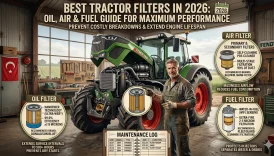
“10 Tractor Parts That Fail Most Often (And How to Prevent Costly Breakdowns)”
- “10 Tractor Parts That Fail Most Often (And How to Prevent Costly Breakdowns)”
- 1. The Battery and Electrical System
- 2. Hydraulic Pumps and Hoses
- 3. Clutch Components (The Transmission Interface)
- 4. Fuel Injectors and High-Pressure Pumps
- 5. Cooling System (Radiators and Water Pumps)
- 6. Tires and Wheel Bearings
- 7. Braking Systems
- 8. Air Filtration Systems
- 9. Belts and Drive Chains
- 10. Implementation and 3-Point Hitch Pins
- Maintenance Summary Table
- Conclusion: The Cost of Neglect vs. The Value of Maintenance
Tractors are the backbone of any successful farming operation. They are engineered to be rugged, powerful, and durable. However, even the most robust machine has its limits. In the demanding environment of modern agriculture—characterized by extreme dust, heavy loads, and long operating hours—certain components are prone to wear and tear more than others.
A sudden mechanical failure during peak season is more than just a repair bill; it is a loss of precious time and productivity. Understanding which parts are most likely to fail and implementing a proactive maintenance strategy can save you thousands of dollars.
Here is a comprehensive guide to the 10 tractor parts that fail most often and the best practices to prevent these breakdowns.
1. The Battery and Electrical System
Modern tractors are increasingly reliant on complex electronics, from GPS guidance systems to electronic control units (ECUs). This puts a massive strain on the electrical system.
- Why It Fails: Excessive vibration, extreme temperature fluctuations, and corrosion are the primary culprits. Additionally, tractors often sit idle during the off-season, leading to parasitic drain and battery sulfation.
- Prevention Tips: * Clean Terminals: Regularly scrub battery terminals with a wire brush to remove oxidation.
- Secure Mounts: Ensure the battery is tightly clamped to minimize vibration damage.
- Off-Season Care: Use a battery tender or disconnect the battery during long periods of inactivity to maintain its charge.
2. Hydraulic Pumps and Hoses
The hydraulic system is the “muscle” of the tractor, powering everything from the 3-point hitch to the front-end loader.
- Why It Fails: Contamination is the number one killer of hydraulics. Microscopic dirt or metal shavings can score the pump’s interior. Over time, high-pressure hoses also become brittle and crack due to UV exposure and heat.
- Prevention Tips:
- Fluid Cleanliness: Never add hydraulic fluid from an unsealed or dirty container.
- Filter Schedule: Replace hydraulic filters strictly according to the manufacturer’s hourly intervals.
- Visual Inspections: Check hoses for “weeping” or bubbles. Replacing a $50 hose is much cheaper than replacing a $2,000 pump after it runs dry.
3. Clutch Components (The Transmission Interface)
The clutch takes a beating, especially during tasks that require frequent gear shifting or heavy towing.
- Why It Fails: “Riding the clutch” (keeping a foot partially on the pedal) creates friction and heat that warps the flywheel and burns the friction material. Improperly adjusted pedal free-play also leads to premature wear.
- Prevention Tips:
- Operator Training: Train drivers to keep their feet off the pedal unless shifting.
- Correct Gearing: Always start in a gear appropriate for the load to avoid excessive slipping.
- Adjustments: Periodically check and adjust the clutch linkage to ensure there is adequate free-play.
4. Fuel Injectors and High-Pressure Pumps
Modern Common Rail Diesel (CRD) engines operate at incredibly high pressures. Even a tiny amount of water or debris in the fuel can cause catastrophic failure.
- Why It Fails: Poor fuel quality and water contamination lead to corrosion and blockage of the injector nozzles.
- Prevention Tips:
- Quality Fuel: Buy fuel from reputable suppliers and keep your storage tanks clean.
- Daily Drainage: Drain the water separator/sedimenter every morning before starting the engine.
- Full Tanks: Fill the tractor’s fuel tank at the end of every day to prevent moisture from condensing in the empty space overnight.
5. Cooling System (Radiators and Water Pumps)
Tractors work in environments filled with chaff, dust, and debris, which can quickly choke a cooling system.
- Why It Fails: Clogged radiator fins lead to overheating, which can warp cylinder heads or blow gaskets. Using plain water instead of coolant causes internal scale buildup and water pump seal failure.
- Prevention Tips:
- Daily Cleaning: Use compressed air or a soft brush to clean the radiator screen and fins daily.
- Antifreeze/Coolant: Always use a 50/50 mix of high-quality antifreeze and distilled water to prevent corrosion.
- Belt Tension: Regularly check the fan belt for cracks and proper tension.
6. Tires and Wheel Bearings
Tractor tires are a significant investment, often costing thousands of dollars per set.
- Why It Fails: Incorrect inflation is the leading cause. Under-inflation causes sidewall cracking, while over-inflation leads to excessive center wear and poor traction.
- Prevention Tips:
- Pressure Checks: Use a low-pressure gauge to check tires weekly. Adjust pressure based on whether you are doing heavy tillage or road transport.
- Grease Bearings: Ensure wheel bearings are greased according to the manual to prevent seizing, especially if working in muddy conditions.
7. Braking Systems
While tractors aren’t known for high speeds, their braking systems handle immense weight, especially on slopes.
- Why It Fails: Most modern tractors use “wet brakes” submerged in oil. If the wrong oil is used or if it becomes contaminated, the brake discs will chatter and wear out prematurely.
- Prevention Tips:
- Balanced Pedals: Ensure the left and right brake pedals are locked together during road travel to avoid uneven wear and dangerous swerving.
- Oil Specs: Only use Transmission-Hydraulic fluid that meets the specific friction requirements of your tractor brand.
8. Air Filtration Systems
A tractor engine consumes thousands of cubic feet of air. In a dusty field, the air filter is the only thing standing between your engine and total destruction.
- Why It Fails: A clogged filter restricts airflow, increasing fuel consumption and causing “black smoke.” If a filter is damaged, dust enters the cylinders and acts like sandpaper on the piston rings.
- Prevention Tips:
- Monitor Indicators: Most modern tractors have a “restriction indicator.” Only service the filter when the indicator tells you to, as over-servicing increases the risk of dirt entering the intake.
- Inner Filter Safety: Never clean the inner (safety) filter. If it’s dirty, replace it.
9. Belts and Drive Chains
Belts drive the alternator, water pump, and AC compressor. Chains (in some older models or attachments) transfer power to auxiliary systems.
- Why It Fails: Heat and dry rot cause rubber belts to crack. Chains fail due to lack of lubrication and improper tension.
- Prevention Tips:
- The “Twist” Test: A belt should generally not twist more than 90 degrees in the middle of its longest span.
- Regular Lubrication: Use a dedicated chain lube that doesn’t attract excessive dust for any external drive chains.
10. Implementation and 3-Point Hitch Pins
The hardware that connects your implements to the tractor is often the most neglected.
- Why It Fails: Constant friction between the implement and the hitch pins causes the metal to thin and eventually snap under load.
- Prevention Tips:
- Grease Regularly: The 3-point hitch and grease zerks on the front axle should be lubricated every 10–50 hours.
- Replace Pins: Don’t wait for a pin to break. If you notice significant “slop” or wear in a hitch pin or bushing, replace it immediately.
Maintenance Summary Table
| Component | Priority Level | Key Maintenance Action |
| Engine Oil | Critical | Change every 250–500 hours based on usage. |
| Radiator | High | Blow out dust and debris daily during harvest. |
| Fuel Filter | High | Replace every 500 hours; drain water daily. |
| Hydraulic Oil | Medium | Check levels weekly; change annually or at 1000 hours. |
| Grease Points | Constant | Lubricate all fittings every 10-50 hours of work. |
Conclusion: The Cost of Neglect vs. The Value of Maintenance
The difference between a tractor that lasts 5,000 hours and one that lasts 15,000 hours is rarely the brand name—it is the maintenance routine.
By keeping your fluids clean, your radiators clear, and your electrical systems protected, you aren’t just preventing a breakdown; you are protecting your bottom line. Always keep a logbook in the cab to track service hours and part replacements. A well-maintained tractor is not only more reliable but also holds a significantly higher resale value when it’s time to upgrade.